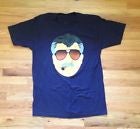
A Tribute To "Iron" Mike Ditka, THE Face Of Chicago, Who Passed Away Today at 86
Chicago Sun-Times- Mike Ditka, the Hall of Fame tight end who played on the Bears’ 1963 NFL championship team and coached the team to its only Super Bowl championship after the 1985 season, has died. He was 86.
He died about 9 a.m. Friday surrounded by family and friends, a family spokesperson said.
A statement issued by the family said that “while the world knew Mike as a Hall of Fame football player, legendary coach and leader of the Chicago Bears’ Super Bowl XX championship team, we knew him as the heart of our family. Mike will be missed beyond measure and remembered forever.”
As a player, a coach and a larger-than-life personality who invigorated a generation of Bears fans, Ditka left an indelible mark on the Chicago sporting landscape — from the playing field to sports talk to pop culture — that few can match. Of Chicago’s impressive list of Hall of Fame athletes — Sid Luckman, Walter Payton, Bobby Hull, Ernie Banks, Stan Mikita, Frank Thomas among the all-time greats — only Michael Jordan can challenge Ditka’s legacy as a local sports icon.
As a Bears legend, Ditka was one of the last direct links to George Halas, the Bears’ founder and owner. Halas drafted Ditka out of Pittsburgh in 1961. And even after a falling out that led to Halas trading Ditka in the prime of Ditka’s career in 1967, Halas hand-picked Ditka to coach the Bears in 1982. Four years later, Halas was gone (he died in 1983), but Ditka led the Bears to victory in Super Bowl XX in the midst of the best run of Bears success since winning four NFL titles from 1940-47 with Luckman at quarterback.
The son of an ex-Marine, Michael Keller Ditka grew up in Aliquippa, Pennsylvania, 20 miles northwest of Pittsburgh, and was a three-sport star — football, basketball and baseball — at Aliquippa High School. As a shortstop, he attracted interest from the Cincinnati Reds and Milwaukee Braves as a senior. But he opted for football and chose Pitt over Notre Dame and Penn State.
When people say somebody embodies a team, a city, or a certain way of life, it's usually a pretty big exaggeration. It's one of those things people say about athletes and coaches when they want to make them sound larger than life.
But every once in a while, somebody comes along who actually deserves that description. Somebody whose personality, attitude, and entire existence seem to perfectly represent the place they call home.
And I don't know if there's ever been a better example of that than Mike Ditka and the city of Chicago.
Coach Ditka passed away today at the age of 86, and it's hard to really put into words what this guy meant to the Chicago Bears, the city, and the generations of people who grew up idolizing him.
Because Ditka wasn't just a football coach. He was Chicago. And the Chicago Sun-Times did a great job writing his obituary this morning.(Which I've cited here in some parts)
Ditka also played basketball and baseball at Pitt, but it was clear that football was his future. As a senior, Ditka was a first-team All-American at end.
“He is the best college player in the country,” Pittsburgh Steelers coach Buddy Parker said of Ditka. Parker likely wanted Ditka for the hometown Steelers and nearly had the chance. The Bears selected Ditka with the fifth overall pick of the 1961 draft (conducted Dec. 27, 1960) — after winning a coin flip with the Steelers. Halas was looking to capitalize on Ditka’s outstanding blocking ability, but quickly realized he had much more than that in the 6-3, 230-pound end. Combining his size, strength, athleticism with his own brand of relentless aggressiveness, Ditka transformed the end position into a pass-catching, big-play role rarely seen before in the NFL.
He had 56 receptions for 1,076 yards (19.2 yards per catch) and a franchise-record-tying 12 touchdowns as a rookie in 1961 — winning the NFL Rookie of the Year Award.
Ditka made the Pro Bowl his first five seasons with the Bears and was named first-team All-Pro in 1963 and 1964. His 75 receptions (for 897 yards and five touchdowns) in 1964 set an NFL record for a tight end that lasted for 16 seasons
Tough, loud, stubborn, opinionated, blue-collar, unapologetic, and completely incapable of giving a shit what anybody thought about him. He was the kind of guy who would tell you exactly what was on his mind, whether you wanted to hear it or not, and if you didn't like it, that was your problem.
The mustache, aviators, sweater vest, legendary temper, cigars. Everything about the guy was fucking iconic, right down to the way he stood on the sidelines looking like he was about three seconds away from murdering a referee in cold blood.
He legit looked like somebody went into a laboratory and tried to create the most Chicago human being imaginable. And the crazy thing is, he wasn't even from Chicago. He grew up in Pennsylvania. But I don't think anybody would ever argue that he wasn't a Chicagoan through and through.
But Ditka became disenchanted in 1966, when he had just 32 receptions for 378 yards and two touchdowns and, claiming a “clash of personalities” with Halas, signed a three-year contract with the AFL’s Houston Oilers. Before the Bears could challenge the legality of that move — the AFL and NFL were in the process of a merger — Halas traded Ditka to the Eagles for quarterback Jack Concannon.
Ditka played two seasons with the Eagles and four with the Cowboys, but never had the same impact. He did win a Super Bowl with the Cowboys, catching a seven-yard touchdown pass to complete a 24-3 victory over the Dolphins in Super Bowl VI in Dallas’ 24-3 victory after the 1971 season.
Ditka retired after the 1972 season — his 427 career receptions were the most by an NFL tight end at the time. He immediately became a special teams and wide receivers coach for the Cowboys and coach Tom Landry. He was never considered a major candidate for a head coaching job, but always had his eye on the Bears.
“In 1978, I wrote Mr. Halas a letter,” Ditka said in his book, “In Life, First You Kick Ass,” written with Sun-Times columnist Rick Telander. “I was the special teams coach for the Cowboys and I was no big deal. Maybe I was a little wild. But what I said in the letter was, ‘We didn’t part on the best of terms when you traded me, but I would love to come back some day, back to Chicago. And be the head coach. I’m not ready yet, but I will be some day. I’ll bring back Chicago Bears tradition and pride. I promise.’”
Halas took Ditka’s sentiment to heart. In 1982, after consecutive seasons of 7-9 and 6-10, he fired coach Neill Armstrong and hired Ditka.
“I believe everyone has a destiny in life and mine is with the Chicago Bears,” Ditka said at the press conference announcing his hiring.
His football accomplishments speak for themselves. He was a Hall of Fame tight end who helped revolutionize the position, won an NFL championship with the Bears in 1963, and eventually returned to coach the franchise to its only Super Bowl championship following the 1985 season.
And what a fucking team that was. The '85 Bears weren't just one of the greatest football teams ever assembled. They were one of the greatest collections of personalities in the history of professional sports. You had Walter Payton, Jim McMahon, Mike Singletary, Richard Dent, Dan Hampton, The Fridge, and even Buddy Ryan on the sidelines. And somehow, with all those gigantic personalities sharing one locker room, Ditka still managed to be the biggest character of them all.
Think about how absurd that is.
There have been plenty of great teams over the years, and plenty of coaches who have won more championships than Ditka. But how many of them are still talked about the way that 1985 Bears team is talked about more than 40 years later?
Chicago has been living off that one Super Bowl for four decades, and somehow I don't think anybody is going to stop talking about it anytime soon.
But here's what I think really separates Ditka from everybody else.
Michael Jordan is probably the most famous athlete to ever play in Chicago. And there are other names- Payton, Ernie Banks, Bobby Hull, and Ryne Sandberg- who will always hold an enormous place in the city's history. But Jordan became a global icon. He transcended Chicago and became bigger than the sport of basketball itself. Ditka was different.
Ditka WAS Chicago.
He represented the kind of attitude that people from this city take pride in- work hard, don't make excuses, don't take shit from anybody, and if somebody knocks you down, get back up and hit them harder. Was he perfect? Of course not. He could be an asshole. He was notoriously stubborn, had an explosive temper, and wasn't always the easiest guy to get along with. He butted heads with players, fellow coaches, and just about anybody else who crossed his path.

Advertisement
But that was also part of what made him who he was. He never tried to be some polished, corporate, media-trained version of himself. What you saw was what you got, for better or worse. And people of Chicago fucking loved him for it. Think about how famous a football coach has to become for Saturday Night Live to build an entire recurring sketch around the idea that a bunch of guys from Chicago worship him like a deity. (One of the funniest parts about my early years in Chicago was coming to realize that those sketches I had grown up watching on tv weren't really that far off exaggerating how real-actual-Chicagoans looked, sounded, and felt about Mike Ditka.)
He became part of the city's identity in a way that very few people ever have. And that, to me, is what makes today's news so sad. We all knew he was getting older, and that he wasn't in the best health in recent years. And at 86 years old, nobody can say he didn't live a hell of a life. But it still feels strange knowing he's gone. Because guys like Ditka almost feel like they're supposed to be around forever. They're such permanent fixtures in the places they represent that you almost forget they're human.
For decades, no matter how much the Bears struggled, or how many quarterbacks they went through, or how many coaches they fired or rebuilds they promised, there was always Ditka. Always that reminder of what the franchise once was, and what it meant to an entire city when the Bears were the biggest, baddest team on the planet.
And now that he's gone, it really does feel like another piece of old-school Chicago is gone with him. They truly don't make many guys like Mike Ditka anymore. And I seriously doubt we'll ever see another coach who becomes quite as synonymous with a franchise and a city as he did.
He was a Hall of Famer, a champion, a Chicago institution, and one of the greatest characters the NFL has ever seen.
Rest In Peace to Da' Coach.
BONUS- Here's an appreciation blog I did for Iron Mike a while back. Felt it was fitting to repost today.
(MUST LISTEN RADIO CALL FOR THE BLOG)
Old school, true-blood Chicagoans will roll their eyes and say, "yeah, no shit, man, how have you never heard that before?" So let me start by apologizing, and telling you to choke on a kielbasa. Sorry but I had never heard that radio caller get fucking treated by Iron Mike before this past weekend.
Holy shit, that was amazing.
They really don't make them like Mike Ditka anymore.
When I first moved to Chicago in the early 2000s, I thought the Mike Ditka thing was a bit. The shades, the sweater vests, the “Da Bears” chorus that popped up in line at a hot dog stand- it all felt like a running joke everyone was in on except me. Then I started listening and watching. One night, it was an old NFL Films reel. Another was a walk past Ditka’s Steakhouse with the wind cutting through my coat, and seeing a line of people outside waiting for their table to open up. A few bar conversations later- fathers talking about ’85 like it just ended last week- and the joke disappeared. It wasn’t parody, it was actually far from it.
Advertisement
He started far from here, in Carnegie, Pennsylvania- your typical steel town, Polish-American family, work first, talk later.
At Pitt he became the tight end who made coaches fall in love with the position- three-time All-American, hands like clamps, attitude like a doorman who never takes a night off.
Back then, tight ends were basically extra linemen who caught a ball now and then. Ditka was the first to turn it into a full-time job.
 Bettmann. Getty Images.
The Chicago Bears drafted him in 1961 and it felt like destiny. He played the game the Chicago way. Hard nosed as fuck. And he treated the middle of the field like it belonged to him- dragging tacklers, finishing runs, and changing the temperature of games.
He left for Philadelphia, then Dallas, where he won a Super Bowl with the Cowboys, even scored in it, and by the time he was done he’d drawn up the blueprint for the modern tight end: He transformed the position from a sixth blocker into a tone-setter. He was Gronk before Gronk.
Coaching came next for him. He learned under Tom Landry in Dallas- "the place you go to understand details" according to Ditka, and he brought that structure back to Chicago when he took over in 1982.
 Bettmann. Getty Images.
Advertisement
In 1985 it all broke loose- Bears 46 defense suffocating people, an offense that hit first and danced later, and Ditka on the sideline like a foreman in front of a blast furnace.
You can quote the score of Super Bowl XX if you want, but I won't be. According to what I've been told, it was a months-long parade. Neighbors became teammates. Kids learned new words- toughness, effort, team, and adults remembered what they meant.
He was basically Bill Belichick if you were actually worried he might kick your ass. Say it, do it, don’t blink-that was Ditka.
Tough, hard-nosed, straight ahead, just like Chicago.
The stubborn streak, the sideline glare, the blowups- those weren’t flaws, they were the cost of a real standard.
People here didn’t mind the rough edges because they knew they were honest. With Ditka, you always knew where you stood and exactly what the job was. And they loved him for it.
Fuck, they still do.
The Superfans skits are so funny because of how true they are.
After Chicago he headed to New Orleans (1997–1999), where he tried to impose that same standard, sometimes with mixed results.
After he mortgaged the franchise's future on Ricky Williams, and that flamed out, broadcasting followed. With his sandpaper voice, straight shots, no teleprompter needed, he became a favorite.
Advertisement
His image and personal brand turned into its own landmark: the steakhouses, the cigars, the sweaters, that scowl stamped onto hats and walls. So many stars fade into a logo. Ditka turned into neighborhood décor. It was crazy. You measure your assimilation here by how natural it feels to nod at a framed photo of him on your way to a table.
You can't walk around Chicago without seeing his name or face on a billboard or an ad on something. And it's 2025. A few decades ago his name was on everything. Literally. Steaks, BBQ sauces, hot sauces, giardiniera, Italian beef, and of course wine and cigars. The list goes on and on but you get the point.
It's also hard to go anywhere and talk or overhear football discussion centered on the past without hearing his name brought up. Just a few nights ago eating dinner seated at the bar at Volare, an older guy in a #89 jersey sits next to me, and got to telling me how Ditka would block like a guard, leak late, and punish a linebacker. A guy sitting a few seats away pointed to a signed black-and-white photo of him on the wall, “That’s what a leader looks like.”
Chicago doesn’t gild the past.
It remembers the swagger of the Super Bowl Shuffle and the sound of a defense unloading on third down.
It remembers Ditka barking into a microphone and meaning it. It remembers that he went into the Pro Football Hall of Fame as a player in 1988 and stood there because he’d earned it inch by inch
Calling him one of the first great modern tight ends is accurate and still undersells him.
He defined a position, then helped define a franchise, then helped define how a city sees itself.
Some athletes just win.
Some coaches just win.
A few actually set the temperature. Anbd you feel it when you step out into January air. You feel it when a room warms up telling ’85 Bears stories. And you feel it when you arrive here from somewhere else and, through film, snow, and secondhand memories, inherit a hero.
Advertisement
And Nantz' story checks out -
p.s. - awesome Ditka story.
When we first launched Barstool Chicago and nobody had a fucking clue who we were, I was pretty much Dan's assistant, booking agent, and cameraman. He made quick friends with Tom Waddle, and Waddle invited him to a special taping he was doing for The Waddle and Silvy show at Ditka's Steakhouse in Goldcoast and promised to introduce him to him.
We went, it was all media and die-hard Bears fans who had to have won contests to gain access or something because there had to be another 100 or so who didn't get in, standing outside just for a chance to see Ditka or get an autograph.
We used to sell the most bootleg shirts back then. We would literally get an idea and throw it on a shirt. Didn't matter who it was, if it was copywritten, how offensive it was, it was the wild west.
Dan had this guy Eric - who used to do a ton of graphics work for us on the side back then- make a caricature picture of Ditka, and we threw it on some navy shirts and threw them in the store. Ever the entrepreneur, Dan wanted to show Ditka, gift him some, and hopefully have a picture of him wearing one somewhere show up in the future. (Marketing 101).
So my job was to hold the box of tshirts we brought, and have the camera ready to snap a pic when the time came.
Fast forward to the end of the live interview, Ditka is walking around shaking hands, taking pics, and telling stories. He was a natural. Everybody loved him. Waddle finally finds a chance to grab him by the arm and introduce him to Dan. Dan was explaining what he did and I don't think Ditka understood two words of what he was saying, but he was still interested. Then Dan asked for the shirts and I gave him the box. He couldn't get a shirt out of the box fast enough before Ditka's son swooped in and snagged it and held it up. He was blown away. He absolutely loved them. His father saw the cartoonish drawing of him and started chuckling to himself, saying "that's pretty good."
Dan said he brought a box of them for him and handed them to his. His son grabbed them and said they loved them so much they were going to start selling them in their gift store downstairs. (When you walked into the main entrance of the retsaurant, in the lobby there was a check in host stand, a coat check, and a gift shop that sold the entire line of Ditka branded items.)
I'll never forget Dan's and my eyes locking and lighting up at the thought of finally something breaking our way and you could tell we were both thinking the same thing, "maybe we'll finally make some money here."
That was short-lived, sadly, because what Ditka's son had actually meant was that they were going to take the shirt and just make their own and start selling them in the store. Granted, it was his old man's own image and likeness, so I get it, but it just turned out to be such a stomach punch when we found out the bad news after getting so excited.
Advertisement
At least they didn't hit us with a cease and desist.