
The Latest NFL Retirement Closes the Book on the Worst Trade in Patriots History
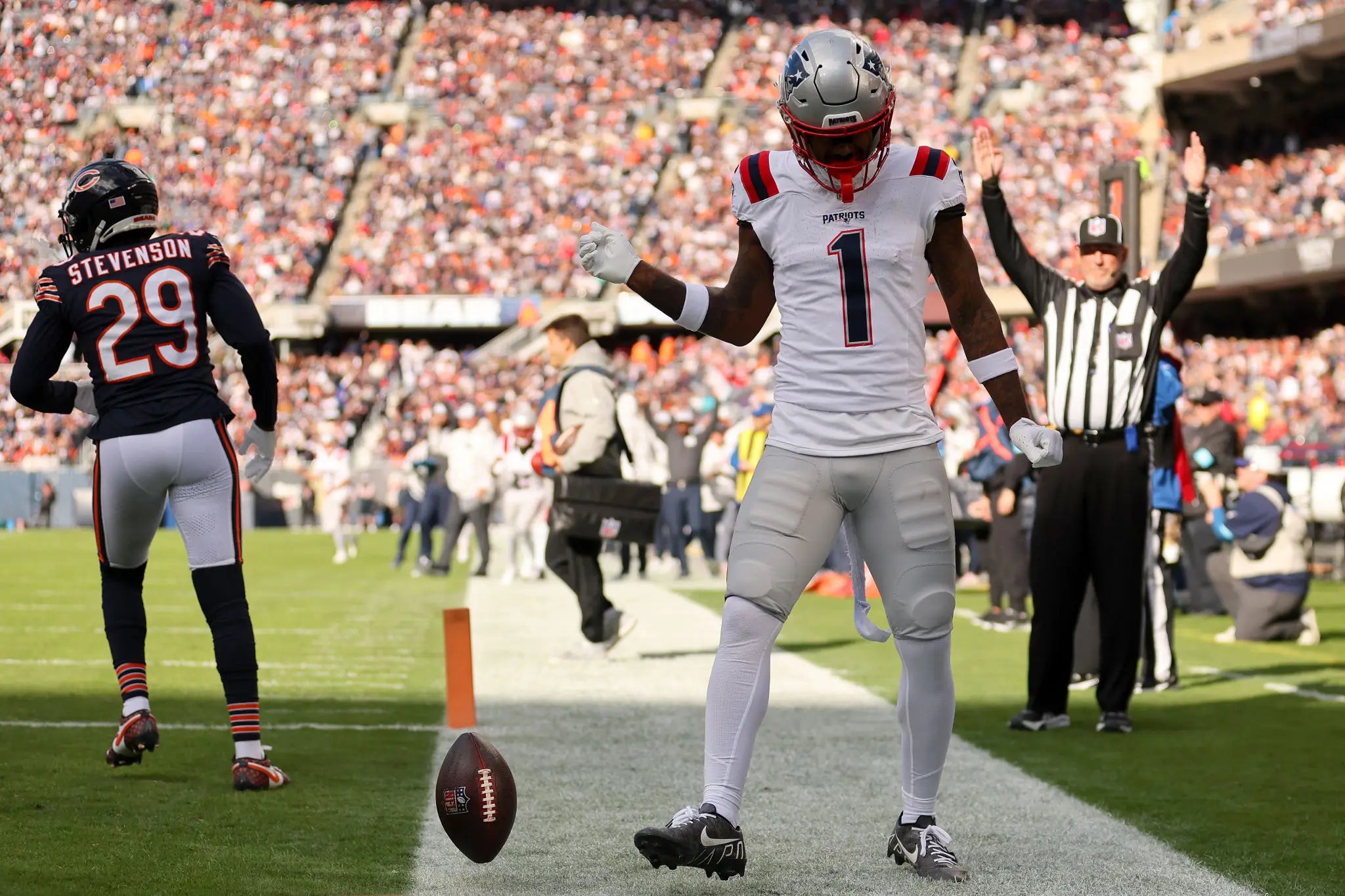 Michael Reaves. Getty Images.
I'll admit I could be accused of hyperbole with that headline. You can any time you go with a superlative and leave out all the qualifying words like "Perhaps" and "Could Be." Especially when you're talking about a franchise that didn't win its first NFL playoff game until it had been in the league for 15 years, and had double digit wins in only six of its first 33 years of existence (including the AFL). You don't spend as much time near the bottom of the league as the Pats did from 1960-2000 without trading a lot of perfectly good milking cows over for some fistfuls of magic beans.
One such trade that has kind of been lost to history came in 1991, when they sent the No. 1 overall pick to Dallas in exchange for the 11th and 41st picks, and three guys you'd have to look up. Jimmy Johnson used the first pick on Russell Maryland, who became a cornerstone of his three-time Super Bowl champion defense. But as least the Pats used those picks on Pat Harlow, who played 74 games for them at tackle and safety Jerome Henderson, who had 5 INTs over two seasons. That's not nothing.
A more recent example would be in 2019, when one disastrous personnel move after another at wide receiver forced Bill Belichick's hand, so he sent a Round 2 pick to Atlanta for Mohamed Sanu, just so Tom Brady would have some kind of a second option after Julian Edelman. Sanu produced a grand total of 26 catches for 207 yards and 1 TD in 8 games, and didn't survive the cut in 2020.
But those trades are Auerbach Brain-levels of genius compared to the deal the Eliot Wolf/Jerod Mayo braintrust made in 2024.
It's often said that you can't properly evaluate a trade or a draft pick for at least three years. Well two seasons after this one, we can sign the autopsy report, file it, and make it a matter of public record. Here's where this one stands, now that Polk is retired after being medically cleared to play in 2026. The entire career numbers of the four draftees involved:
Polk: 15 games, 33 targets, 12 receptions, 87 yards, 2 TDs
Javon Baker: 11 games, 4 targets, 1 reception, 12 yards, 0 TDs
Ladd McConkey: 32 games, 218 targets, 1,938 yards, 13 TDs
Tarheed Still: 29 games, 115 tackles, 82 solo, 4 INTs
More to the point, McConkey and Still each continue to produce for the Chargers, and are just 24 years old. Where the combined careers of Polk and Baker can't match McConkey two games against New England, where he had 11 catches for 126 yards and 2 TDs.
This is not to beat up on anybody. Wolf just spent the past two offseasons working with Mike Vrabel to rework their team from one of the worst rosters in the league to one of the most talented. Where a short time ago, they lost one-on-one matchups across the field, they now win more than they lose. And Mayo is in the past along with Polk and Baker, so this is no longer about him. Especially since he probably had no say in the matter.
This is just about learning from mistakes. Think of it as an After-Action Report, where you need to take a hard look at what went so horribly wrong and put in the work to make sure it never happens again.
One thing that this should remind us of is that drafting receivers is hard. As I've said tens of thousands of times and will keep repeating until someone proves me wrong (won't happen), is that wideout in the toughest position to evaluate in all of pro sports. The bust factor is off the charts, especially early in the draft where a very successful team's personnel department can decide that a Ja'Lynn Polk is a better option than a Ladd McConkey. Then have to watch the prize they had their eyes on retire at 24, then spend the forseeable future watching the one they passed up on post 1,100-yard seasons.
Here's just hoping this particular record for Worst Trade in Patriots History lasts forever. It wouldn't take all that many to get us back to where we were in 1991 and 2024. And I have no intention of going back to that.

Advertisement
Best of luck in your retirements, Polk and Baker. We hardly knew ye.