
Kurt Cobain's Death Is Being Questioned By A Team Of Specialist Forensic Scientists Who Are Saying It Wasn't A Suicide And Should Be Reinvestigated As A Homicide
Daily Mail - His death shocked fans and sent ripples through the music world, but decades later, Kurt Cobain's final moments are under renewed scrutiny.
The Nirvana lead singer died on April 5, 1994, at age 27, from a self-inflicted shotgun wound at his Seattle home.
At the time, the King County Medical Examiner ruled his death a suicide by a Remington Model 11 20-gauge shotgun.
Now, an unofficial private sector team of forensic scientists has put fresh eyes on Cobain's autopsy and crime scene materials, bringing in Brian Burnett, a specialist who previously worked on cases involving overdoses followed by gunshot trauma.
Independent researcher Michelle Wilkins, who worked with the team, told Daily Mail that after just three days looking into the evidence with fresh eyes, Burnett said: 'This is a homicide. We've got to do something about this.'
She said the conclusion followed an exhaustive review of the autopsy findings, which revealed signs inconsistent with an instantaneous gunshot death.
The peer-reviewed paper presented ten points of evidence suggesting Cobain was confronted by one or more assailants who forced a heroin overdose to incapacitate him, before one of them shot him in the head, placed the gun in his arms and left behind a forged suicide note.
'There are things in the autopsy that go, well, wait, this person didn't die very quickly of a gunshot blast,' Wilkins said, pointing to organ damage associated with oxygen deprivation. 'The necrosis of the brain and liver happens in an overdose. It doesn't happen in a shotgun death.'
Back in 1994 Kurt Cobain dies at 27, shotgun in hand, tragic tortured artist, heroin, depression, 27 Club, boom. Case closed. Cultural mythology complete. One of the most famous human beings on Earth at the time, the face of an entire generation, and the investigation is wrapped up neatly and stamped suicide before most people even had time to process what happened.
And we were just always supposed to accept it. That’s always been the part that bothers me.
And now, decades later, independent forensic investigators are formally asking to reopen the case because they are adamant the physical evidence points to homicide.
But yeah. Nothing to see here.
I’m not saying I know who did it. Because I don’t. I’m not even saying I have the full answers. How the fuck could I?
But what I am saying is that when professionals- not Reddit detectives, or YouTube rabbit-hole guys, but independent forensic experts say the evidence doesn’t add up, I don’t understand why the reaction from so many people is immediate defensiveness instead of “Okay, let’s look at it again.”
If the original ruling was airtight, reopening the case should only reinforce it. Transparency should strengthen the official narrative, not threaten it. Right? So why does it always feel like questioning this one makes people uncomfortable?
A spokesperson for the Medical Examiner's Office told the Daily Mail: 'King County Medical Examiner’s Office worked with the local law enforcement agency, conducted a full autopsy, and followed all of its procedures in coming to the determination of the manner of death as a suicide.
'Our office is always open to revisiting its conclusions if new evidence comes to light, but we’ve seen nothing to date that would warrant re-opening of this case and our previous determination of death.'
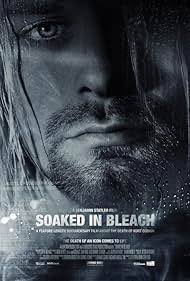
If you’ve seen the documentary Soaked in Bleach, you already know it doesn’t come out and scream “here’s the killer.”
But what it does is walk you through the perspective of Tom Grant, the PI hired by Courtney Love days before Cobain’s body was discovered. Yah, excactly. Very odd to hire a PI to investigate your husband you suspected was going to divorce you, days before he winds up dead.
That's red flag number 1 in this whole thing.
Grant recorded his phone calls at the time, and the documentary leans heavily on those tapes and the inconsistencies he says bothered him immediately.
And you don’t have to believe every frame of that film to admit it raises uncomfortable questions.
Start with the toxicology report.
Cobain’s reported morphine level was "extremely high".
Some experts over the years have argued that the amount of heroin in his system could have rendered him incapacitated within seconds, aka it could have killed an elephant. We're talking three times the amount of what a lethal dose is. THREE TIMES!
Which obviously raises lots of questions about whether he would have been physically capable of positioning the shotgun and pulling the trigger as described.
Others dispute that claim and say tolerance matters. Ok sure, fine. But that’s exactly why you re-examine it under modern forensic standards no?
Then there’s the shotgun mechanics.
The weapon was reportedly a long shotgun, and skeptics have questioned the logistics of how it was fired given Cobain’s height, the length of the gun, and the positioning of the shell. Was it possible? Investigators said yes, but critics and anybody with a brain say the physics deserve another look. I mean, look at this.
And the suicide note is another layer.
Handwriting experts have debated portions of it for decades. Some have claimed the final lines differ in tone and pressure from the earlier parts, suggesting they may have been added separately. When handwriting analysis itself is disputed, why not test it again with today’s technology?
And then there’s the whole timeline. Which doesn't make any sense.
Grant has long argued that the timeline of events in the days leading up to Cobain’s death contains gaps and contradictions.
Who knew what and when?
Why were certain calls made?
Why were some concerns allegedly dismissed?
Why was Love so concerned about Cobain that she hired a PI?
Were the rumors true that he was planning to file for divorce and take custody of their daughter?
Why was the greenhouse area not immediately discovered despite being on the property?
You can think Grant is wrong about everything and still admit those are legitimate investigative questions.
There's also this entire mention of a disturbance call nearly a month prior to his death, that remains extremely suspicious that has almost never been mentioned or talked about.
CobainCase.com- A veteran of the force 21 years, Detective Edwards is recognized throughout the Seattle community. His current position is the detective in charge of the Seattle Police Department’s Property Recovery Unit.
He was the first patrol officer on the scene at Lake Washington that fateful evening on March 18th, 1994.
In an article first published at Cobaincase.com entitled, “Kurt Cobain Did Not Attempt Suicide on March 18, 1994”, Richer pieces together the chronology of the disturbance call, as seen through the eyes of Edwards.
Much to the surprise of Richer, there was no record of the Seattle Homicide Unit ever investigating the March 18th incident in the aftermath of Cobain’s death. And even more amazingly, not a single reporter had ever contacted Edwards about his March 18th police visit to Cobain’s Lake Washington residence.
Below are passages from Richer’s exclusive findings during his interview with the detective.
What Really Happened on March 18th?
Edwards arrived on the scene at the rock couple’s house to discover Love screaming outside on the front porch:
“He locked himself in a room! He’s gotta gun! He’s gonna fing kill himself!” Edwards then informed Love that he would have to wait for backup to arrive before he could enter the house. “Well, if you’re not gonna do anything, then just get the f out of here!” Love shouted.”
In another, even more revealing segment of the correspondence, Richer uncovered the sequence of events during the March 18th incident, as relayed by Edwards:
“We were always led to believe that the police encountered an armed Kurt Cobain locked inside a room in his house that night.”
“According to Detective Everett Edwards, the reality is that Kurt Cobain was not inside the house at all when the police arrived that day.”
“Instead, when Edwards and his partner attempted to enter the house through the backdoor, they discovered an unarmed Kurt Cobain sheepishly standing in the backyard with his hands in his pockets.”
“Moreover, Cobain did not appear suicidal; rather, he seemed deeply embarrassed by the situation. “He just really wanted to get out of there,” said Edwards (who had then, incidentally, never heard of Kurt Cobain).”
Additionally, Edwards disclosed that Cobain ‘calmly’ walked with the officer to sit in the backseat of his squad car to discuss the circumstances of the disturbance call. Recounting the events of that evening, Edwards recollected, “He [Cobain] was just a very, very nice guy,” and did not appear to be under the influence of any drugs.
Also, according to Richer’s interview with Edwards, Cobain acknowledged to authorities that he had “simply locked himself in a room after an argument, ” and had no intention of harming himself.
Although much was made of the March 18th police visit after Cobain’s death, the matter had been handled according to police protocol in domestic situations, as officers confiscated Cobain’s firearms and medication at the house that evening.
"After further interviewing Ms. Love, she stated that she did not see him with a gun, and he did not say he was going to kill himself.”
From there, the whole thing gets even sketchier.
The details regarding the so-called March 18th incident would greatly influence public perception about Cobain’s apparent mental state, as it marked the first of two official reports that Love would make to the Seattle Police Department in under a month – falsely claiming Cobain was ‘suicidal’ with a gun.
It’s been long-established that Cobain legally obtained the shotgun for personal protection before going to the non-lockdown rehab facility.
In the aftermath of Cobain’s death, the March 18th incident had become mythologized by many throughout entertainment media. One such case as mentioned by Richer, was a SPIN Magazine interview with Love that was published in February of 1995. According to that article, the well-known widow recounted an entirely different chain of events on the evening of March 18th, during her featured exchange with Craig Marks:
“See those marks on the door. On the wall. That’s from when he [Kurt Cobain] was in here with guns, and I kicked it in. Or tried to.”
“It was too secure.” “He finally just unlocked it. And there were the guns, out. And I grabbed one. This was March 18.”
“I [Courtney Love] grabbed the revolver, and I put it to my head, and I said, ‘I’m going to pull this right now.”
“I cannot see you die. I cannot see you die again.’ He [Kurt Cobain] grabbed my hand. He was screaming.” “There’s no safety. You don’t understand, there’s no safety on that. It’s going to go off.’ So he got it from me.”
And I [Courtney Love] was seriously going to blow my head off right in front of him, because I could not deal with it.”
It’s worth noting Richer’s thoughts regarding Love’s SPIN Magazine revision of the March 18th incident. He explains:
“This story, of course, completely contradicts the account given to us by Detective Everett Edwards, a decorated police officer with an exemplary record. In fact, Courtney Love never told this dramatic version of the March 18th incident to anyone prior to its appearance in SPIN.”
Added on top of all of this, the investigation felt very fast.
There was no grand jury. No prolonged public forensic breakdow, and no dramatic courtroom moment where evidence was dissected under a microscope. There was just a ruling that fit the archetype almost too cleanly. Cobain was a "depressed rock star", suffering from heroin addiction. After all, his suicide note referenced fame and exhaustion.
And the case was closed.
It’s narrative fit perfectly.
Too perfect?
Call me crazy, but when a death conveniently reinforces a pre-existing myth, I get suspicious.
If independent analysts are saying the morphine levels deserve scrutiny, the handwriting deserves re-evaluation, and the weapon mechanics deserve reconstruction, and the original investigation may have overlooked or prematurely dismissed conflicting indicators, why is reopening it so controversial?
If the original conclusion is correct, reopening it only confirms it right?
I’m saying when a case involving one of the most famous musicians in the world was rushed, and now modern professionals are saying the evidence doesn’t align cleanly with suicide, we don’t get to pretend that’s insignificant.
Make it make sense.
Do yourself a favor and watch Soaked In Bleach on Apple+ and you'll be asking the same questions. How this documentary didn't blow up when it came out 10 years ago is crazy.
p.s. - this was always taken with a very, very large grain of salt, but bears mentioning.
In Kurt & Courtney, the documentary by Nick Broomfield, Eldon “El Duce” Hoke of The Mentors goes on camera and claims that Courtney Love allegedly offered him $50,000 to kill Kurt Cobain
He says it flat out on. camera.
This guy was not exactly a choir boy. He was described as a "chaotic alcoholic", and people close to him later said he made the whole thing up. That’s part of the record too. But a public, filmed allegation of murder-for-hire connected to one of the most famous deaths in music history is not a small thing.
And then, not long after giving that interview, he is dead, struck by a train. Officially ruled an accident.