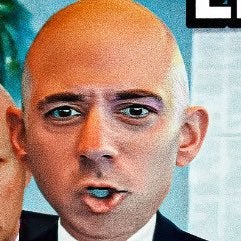

The Rise of the Metrosexual
By Dan McCarthy
feedback@barstoolsports.com
"Because there is very little honor left in American life, there is a certain built-in tendency to destroy masculinity in American men." - Norman Mailer
I love being a guy. I love my ability to pee standing up, to burp in public, and to get ready in ten minutes. However, there is something that has been concerning me lately: guys my age who share an interest in sports and beer are becoming scarce. We are rapidly being replaced by a new breed of man that has wormed itself into our culture: the metrosexual. Metrosexuality is everywhere these days. When we go out to get food with our friends, it's no longer hanging out, it's a "man-date," according to the New York Times. Taking a shower and washing your hair isn't enough anymore - you need to get "manscaped."
I'll be honest: I HATE LOATHE DESPISE metrosexuals. Metrosexuality is bullshit. It is a bankrupt personal philosophy. I even hesitate to use the word "personal," since by this point metrosexuality has become a packaged phenomenon that you can pick up for a couple hundred bucks at a major department store. The best argument for why metrosexuality blows, however, is the general personal quality of the type of dude you would find wearing $400 jeans, but the second-best is the article written by British writer Mark Simpson, who first defined the term in
1994 with this sentence:
"The typical metrosexual is a young man with money to spend, living in or within easy reach of a metropolis - because that's where all the best shops, clubs, gyms and hairdressers are. He might be officially gay, straight or bisexual, but this is utterly immaterial because he has clearly taken himself as his own love object and pleasure as his sexual preference."
In other words, metrosexuality is making your life all about you. It is a NEGATIVE TERM, as its inventor defines it. You become what you own - you are a hairstyle, a sculpted abdomen, and a flawless mask of oil-free pores. The word "metrosexual" screams materialism and self-absorption, so whenever I hear someone define themselves as such I want to bust out a tire iron and perform some frontier orthodontia.
I get questions from girls a lot about why metrosexuality is irritating - generally, the phrasing is "Why wouldn't you want to make yourself look nice?" You know why? It's not about looking nice. All I have to do is be presentable, which I can do with a $3 bottle of Pert Plus and a toothbrush. I'm not going to grow a lumberjack beard or go weeks without showering, but as long as I can smell and look decent in public, I'm fine. If I have to expend any more effort than is barely necessary on "looking nice," then the people who are going to notice that kind of discrepancy and use it to pass judgment on me aren't people I want to impress anyway. Seriously, do you really want to be around people who take your A-Rod-inspired hair highlights into account as a deciding factor on whether you are worth hanging out with? If you are a woman, do you really want to be with a dude who spends more time and money on hair and skin products than you do? If the answer is yes, then I want to spray your internal organs around the room.
Obviously, some women will still consider a guy who is willing to jump through these hoops a "finished product" and will find him more attractive, albeit slightly feminine. However, these are the kind of women who need their men to identify, share and appreciate their sartorial choices and give them tips on exfoliation. Being overly appearance-conscious isn't a good quality in either sex, and if you find yourself buffing your nails or spending 30 minutes selecting a shirt to appease your significant other, you had best check yourself before the Queer Eye team pops out of your closet. (So to speak.)
Buying a $500 purse or spending $100 on a haircut is basically a big "fuck you" to the rest of the world. It's saying, "I know I could be helping other people with this money, or even buying something selfish I don't need like a plasma-screen TV that at least other people can enjoy, but instead I'm going to stare longingly in the mirror and masturbate over how good I look in my pinstriped Armani Exchange shirt."
The value system that we grew up with as men has been irrevocably corrupted. The football-loving, poker-playing guy, in popular culture, has become the TV Dad - the bumbling idiot who never succeeds with women and is the butt of every joke in Hollywood. Everything associated with the traditional definition of masculinity is something to be put down, and beer commercials and lad magazines (which generally insult our intelligence to begin with) are the last bastion of maleness.
WHY IS THIS OKAY? HOW HAS THIS BECOME ACCEPTABLE IN OUR CULTURE?
The first answer is obvious: the fashion industry realized that if they could brainwash the 50% of the population they don't already have suckling at their anorexia-shriveled teat into wanting a bunch of shit they don't need, they could double their profits. Simpson goes on in his article: "The stoic, self-denying, modest straight male didn't shop enough (his role was to earn money for his wife to spend), and so he had to be replaced by a new kind of man, one less certain of his identity and much more interested in his image." How can we get men to spend more money? By making them just as insecure about themselves as women are, that's how. Hence, the feminization of the American male. The second big reason is that guys who have no sense of self glom onto metrosexuality as a way of life because it allows them to buy what they perceive as cool rather than actually being cool.
Go watch American Psycho five or six times. To his "friends," who can look at a guy and immediately identify the price and designer of every article of clothing he is wearing, Patrick Bateman is someone to be emulated. He can do 1000 sit-ups. He uses deep pore cleanser lotion and a herb-mint facial mask. He is rich, good-looking, young, and funny. Of course, he's a raging homicidal psychopath in his spare time. But why would that matter? He's fabulous! The point of the movie is that the glorification of the superficial is ultimately meaningless, because even Bateman's friends don't care to know him well enough to see what's underneath.
Permanence and substance don't come from the opinions of the style editors at GQ. I refuse the notion that I cannot adequately clean myself with a bar of Irish Spring. I have cut my own hair in a satisfactory manner for almost seven years now, and that streak will continue. And if I ever start referring to anything as "product,"
just shoot me in the face. I am a man, and I am still confident in the belief that what women want in a guy isn't a well-fitting pair of jeans and a keen eye for good mascara - it's a guy who can talk sports and fix a truck, no matter what brand his polo shirt is.
Now if you'll pardon me, I have to go return some videotapes.